 Skip to content
When researchers set out to discover which leisure activities could protect the aging brain, one finding caught virtually everyone off guard: regular dancing reduced the risk of dementia by 76 percent. That statistic, drawn from a landmark study published in the New England Journal of Medicine, positioned dance not as a casual hobby but as one of the most powerful non-pharmacological strategies available for preserving cognitive function and reducing dementia risk.
For the millions of families navigating Alzheimer’s disease and other forms of cognitive decline, this evidence offers something rare — a proactive, enjoyable, and accessible approach to brain health. Below, we explore why dancing is so uniquely effective, what the research tells us about dance and dementia prevention, how different types of dance affect the brain, and how dance programs are being used as therapeutic interventions for individuals already living with cognitive impairment.
Can Dancing Help Prevent Dementia? What the Research Shows
The connection between dancing and dementia prevention is supported by decades of research. The most widely cited study appeared in the New England Journal of Medicine in 2003, drawing on 21 years of data from the Einstein Aging Study. Researchers evaluated hundreds of older adults aged 75 and older, tracking their participation in various physical and cognitive leisure activities including reading, writing, crossword puzzles, playing cards, playing musical instruments, dancing, walking, tennis, swimming, and golf.
The results were striking. Of all the activities studied, dancing was the only physical activity that significantly reduced the risk of dementia. Regular dancing reduced dementia risk by 76 percent — twice as much as reading, which lowered risk by 35 percent. Doing crossword puzzles at least four days a week reduced the risk by 47 percent, while cycling and swimming offered no statistically significant benefit at all.
Why was dance so much more effective than other forms of physical exercise? The answer lies in what researchers call “dual-task” engagement. Unlike walking on a treadmill or swimming laps, dancing requires participants to simultaneously process music, coordinate complex movements, remember choreography, make rapid-fire decisions about spatial positioning, and interact socially with partners or a group. This combination of physical activity and cognitive stimulation engages multiple brain regions at once, creating a uniquely powerful stimulus for neuroplasticity — the brain’s ability to form new neural pathways and strengthen existing connections.
What Hobby Reduces Dementia by 76 Percent?
Regular dancing is the hobby that reduces dementia risk by 76 percent, according to the New England Journal of Medicine study. The finding has been reinforced by subsequent research. A systematic review published in Frontiers in Aging Neuroscience analyzed data from multiple controlled trials and concluded that dance interventions produce consistent improvements in cognitive function, balance, and quality of life among older adults.
Similarly, a systematic review in the Journal of the American Geriatrics Society found that dance-based programs improved executive function, attention, and processing speed more effectively than conventional physical exercise alone.
The distinction matters. Many forms of physical exercise benefit cardiovascular health and general fitness, but the cognitive demands of dance — learning new steps, adapting to tempo changes, synchronizing with music and partners — create an additional layer of mental stimulation that appears to be critical for dementia prevention. This is why health professionals and researchers increasingly view dance not just as exercise but as a comprehensive brain health intervention.
How Dancing Benefits the Brain: The Science of Dance and Cognitive Function
Understanding why dance is so effective requires a closer look at how the brain responds to the multifaceted demands of dancing. The benefits of dancing on cognitive health operate through several interconnected mechanisms.
Neuroplasticity & New Neural Pathways
Every time a dancer learns a new step or adapts to an unfamiliar rhythm, the brain is forced to create new neural connections. This process of neuroplasticity is the brain’s primary defense against cognitive decline. Research has shown that dance stimulates the hippocampus — the brain region most associated with memory — and can actually increase its volume, counteracting the natural age-related shrinkage that contributes to memory loss and Alzheimer’s disease.
Dual-Task Cognitive Engagement
Dance uniquely combines physical exercise with real-time cognitive demands: remembering sequences, making rapid-fire spatial decisions, coordinating with music, and responding to a partner’s movements. This dual-task engagement strengthens the brain’s executive function — the set of mental skills that govern planning, attention, multitasking, and problem-solving. Decline in executive function is one of the earliest and most debilitating features of cognitive impairment, and activities that strengthen it are among the most effective tools for prevention.
Social Interaction and Emotional Well-Being
Social engagement is one of the most consistently identified protective factors against dementia. Dancing, particularly social dancing such as ballroom dancing, folk dancing, or group dance classes, naturally fosters social interaction, emotional connection, and a sense of community. Social isolation and loneliness, by contrast, are recognized risk factors for cognitive decline and Alzheimer’s disease. Dance programs that bring people together in a structured, enjoyable setting address both the physical and social dimensions of brain health simultaneously.
Beyond cognitive benefits, dance also supports mental health more broadly. Studies have found that regular participation in dance reduces symptoms of depression and anxiety among older adults and patients with mild cognitive impairment, improving overall well-being and quality of life. The joy, self-expression, and sense of accomplishment that come from learning a new routine or performing with a group provide a meaningful positive effect on emotional resilience.
Types of Dance and Their Impact on Alzheimer’s Prevention
Not all dance styles engage the brain in the same way, and understanding the differences can help individuals and caregivers choose the most beneficial approach.
Ballroom Dancing
Ballroom dancing, including styles like the waltz, foxtrot, tango, and cha-cha, has received significant attention in dementia research. Because it requires a dancer to coordinate with a partner, respond to musical cues, navigate the dance floor spatially, and remember specific step patterns, ballroom dancing engages nearly every cognitive domain. Clinical trials have demonstrated that ballroom dancing improves balance, gait, and cognitive function in both healthy older adults and those with mild cognitive impairment.
Line Dancing and Group Choreography
Line dancing and group choreographed dance classes involve memorizing sequences of steps performed in unison with others. These formats are particularly well-suited for community-dwelling older adults and memory care settings because they do not require a partner and can be adapted to various physical ability levels, including participants in wheelchairs. The combination of memorization, physical movement, and group social engagement makes them highly effective dance-based interventions.
Freestyle and Improvisational Dance
Improvisational or freestyle dance emphasizes creative expression and spontaneous decision-making. While it may involve less structured memorization, it demands rapid-fire cognitive processing — the dancer must continuously generate movement in response to music and the surrounding environment. Some researchers believe this type of unstructured dance may be particularly beneficial for neuroplasticity because it forces the brain to constantly create rather than simply retrieve stored patterns.
Dance Video Games and Technology-Assisted Programs
A study published in BMC Geriatrics found that dance video games, which combine physical and cognitive training, were more beneficial in improving walking accuracy and pace in older adults than muscle strengthening exercises alone. These technology-assisted dance programs represent a promising frontier, particularly for individuals who may have limited access to in-person dance classes or who are more comfortable engaging with technology in a home setting.
Dance as a Therapeutic Strategy for Dementia and Alzheimer’s Patients
Dance is no longer viewed solely as a preventive measure — it is increasingly recognized as a valuable therapeutic intervention for individuals already living with dementia and Alzheimer’s disease. Dance therapy, sometimes referred to as dance/movement therapy (DMT), is a structured approach led by trained therapists who use movement and rhythm to address the physical, emotional, and cognitive needs of patients with cognitive impairment.
Research published across multiple clinical trials and systematic reviews has found that dance interventions can slow the progression of certain symptoms in patients with mild to moderate dementia. Participants in dance therapy programs have shown improvements in balance, gait, spatial orientation, and communication. Perhaps most importantly, dance has been shown to reduce agitation, anxiety, and behavioral symptoms that are common in dementia — outcomes that many pharmacological treatments struggle to achieve without significant side effects.
Dance is considered a non-pharmacological therapy, meaning it achieves its effects without medications. For patients and families seeking alternatives to medication-heavy approaches, or for those looking to complement existing treatment plans, dance-based therapeutic programs offer a compelling option.
What Is the Best Exercise to Prevent Dementia?
While any form of physical activity is better than none for brain health, the evidence strongly suggests that dance is among the most effective exercises for dementia prevention. The key differentiator is the cognitive component. Walking, swimming, and cycling are excellent for cardiovascular health, but they do not challenge the brain’s memory, language, spatial processing, and social cognition systems the way dance does.
The ideal exercise for Alzheimer’s prevention combines aerobic physical activity with cognitive complexity and social interaction — and dance checks all three boxes. This is why organizations including Harvard Medical School and the Alzheimer’s Association have highlighted dance as a uniquely beneficial activity for maintaining brain health as we age.

The Number One Habit to Prevent Dementia: A Broader Perspective
While no single habit can guarantee protection against dementia, research consistently points to a combination of lifestyle factors that, together, dramatically reduce risk. Dancing is arguably the most efficient single activity because it simultaneously addresses multiple protective factors. However, a comprehensive approach to dementia prevention also includes regular mental stimulation through activities like reading, puzzles, and learning new skills; maintaining strong social connections; following a heart-healthy diet such as the Mediterranean or MIND diet; getting regular, high-quality sleep; managing cardiovascular risk factors including high blood pressure, diabetes, and high cholesterol; and limiting alcohol consumption.
The concept of “cognitive reserve” — the brain’s resilience against disease — is built through a lifetime of diverse mental, physical, and social engagement. Dance contributes to cognitive reserve more comprehensively than almost any other single activity, which is why it stands out so prominently in the research literature.
What Are the 7 Habits to Avoid Dementia?
While dancing stands out as an exceptionally effective single activity, researchers and organizations such as the Alzheimer’s Association and the World Health Organization have identified a broader set of habits that, practiced together, can substantially reduce dementia risk. These seven habits represent the most consistently supported lifestyle factors in the scientific literature.
- Engage in regular physical activity — particularly activities that combine physical exercise with cognitive demands, such as dance.
- Stay socially connected through community activities, group classes, volunteering, or regular interaction with friends and family, since social engagement is a powerful protector against cognitive decline.
- Keep the brain mentally stimulated through lifelong learning, puzzles, reading, playing musical instruments, or taking dance classes that require memorization.
- Follow a brain-healthy diet such as the Mediterranean or MIND diet, which emphasize fruits, vegetables, whole grains, fish, and healthy fats.
- Prioritize quality sleep, as chronic sleep deprivation has been linked to increased accumulation of brain proteins associated with Alzheimer’s disease.
- Manage cardiovascular risk factors including high blood pressure, diabetes, obesity, and high cholesterol, all of which increase dementia risk when left uncontrolled.
- Protect mental health by addressing depression, anxiety, and chronic stress, which are recognized risk factors for cognitive impairment later in life.
Dancing is remarkable because it directly supports at least four of these seven habits simultaneously — physical activity, social connection, mental stimulation, and mental health improvement — making it an extraordinarily efficient single intervention.
What Is the Life Expectancy of a Person with Dementia?
Life expectancy after a dementia diagnosis varies significantly depending on the type of dementia, the person’s age at diagnosis, overall health, and the quality of care received. On average, individuals diagnosed with Alzheimer’s disease live four to eight years after diagnosis, though some live as long as 20 years. For a person diagnosed with dementia at age 75, research suggests a median survival of approximately four to six years, though this figure varies widely. Vascular dementia and Lewy body dementia may have somewhat shorter average survival, while frontotemporal dementia typically progresses over six to eight years.
These figures underscore the urgency of prevention. Activities that reduce dementia risk or delay its onset — such as regular participation in dance — can potentially add years of healthy, independent living. Even for individuals already diagnosed with mild cognitive impairment, dance interventions have been shown in clinical trials to slow the rate of decline, helping patients maintain cognitive function and independence for longer.
Can People with Sundowners Live Alone?
Sundowning — a pattern of increased confusion, agitation, and behavioral changes that occurs in the late afternoon and evening — is a common symptom experienced by many patients with Alzheimer’s disease and other forms of dementia. Whether someone experiencing sundowning can live alone depends on the severity and frequency of their symptoms, their overall cognitive and physical functioning, and the availability of support systems.
In mild cases, individuals may manage with structured routines, adequate lighting, and regular check-ins from family members or home care providers. However, as sundowning symptoms become more frequent or severe — including wandering, significant confusion, or safety-related incidents — living alone becomes increasingly risky. Many families find that a transition to assisted living or a specialized memory care community provides the structured environment, professional supervision, and social engagement needed to manage sundowning safely while maintaining quality of life.
Interestingly, research suggests that regular physical and social activity during the day, including participation in dance programs, can help reduce the severity of sundowning symptoms by promoting better sleep patterns, reducing anxiety, and providing a structured daily routine.
Early Signs of Dementia: What to Watch For
Understanding the early signs of dementia is essential for timely intervention. Early symptoms may include persistent memory loss that disrupts daily life, difficulty planning or solving problems, confusion about time or place, trouble following or joining conversations, withdrawal from social activities, changes in mood or personality, and misplacing items with increasing frequency. If you or a loved one is experiencing these symptoms, it is important to seek evaluation from a healthcare professional. Early diagnosis can open the door to interventions — including dance programs — that may slow cognitive decline and improve quality of life.
Signs That Dementia Is Getting Worse
As dementia progresses, symptoms intensify and new challenges emerge. Signs that dementia may be getting worse include increasing confusion and disorientation, difficulty recognizing familiar people or places, significant personality and behavioral changes, inability to perform basic daily tasks such as dressing or bathing, wandering and getting lost in familiar settings, increased agitation or aggression, and difficulty swallowing or eating. Understanding these signs helps families plan appropriate levels of care and support, including transitions to specialized memory care environments when home-based care is no longer sufficient.
The Role of Physical and Social Engagement in Reducing Dementia Risk
One of the most important insights from the research on dancing and dementia is that the physical and social dimensions of dance are inseparable from its cognitive benefits. Physical activity alone improves blood flow to the brain, reduces inflammation, and promotes the release of neurotrophic factors that support brain cell growth and survival. Social engagement, meanwhile, activates brain networks involved in language, emotional processing, and complex social cognition. Dance combines both of these protective mechanisms into a single, integrated experience.
Community-based dance programs are particularly valuable because they bring together participants who might otherwise be socially isolated. For older adults who have retired from the workforce, lost a spouse, or moved to a new community, dance classes and social dancing events provide structure, purpose, and meaningful human connection — all of which are protective against cognitive decline and depression.
Dancing in Action: How Azura Memory Care Uses Dance to Enrich Lives
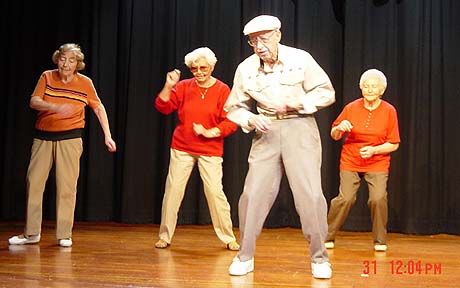
At Azura Memory Care, dance is not just an occasional activity — it is woven into the daily rhythm of life across our communities. Our Quality of Life coordinators lead “Move and Groove” sessions each morning, a dance program designed to combine physical exercise with cognitive engagement and joyful social interaction. Choreography is adapted to meet each resident where they are, with options for those who are ambulatory and those who participate from a wheelchair.
The positive effect of these daily dance sessions is visible in our residents’ energy, mood, and connection with one another. One resident at Azura of Fox Point, Judy Brannon, exemplified the transformative power of dance. Judy’s highlight each day was getting to dance with her neighbors in the morning. She picked up on choreography quickly and even helped other residents learn the steps — a beautiful example of how dance fosters both cognitive engagement and social connection.
As part of our MOSAIC Dreams program, Azura worked to fulfill Judy’s dream of dancing for the Milwaukee Bucks, her favorite sports team. The Bucks Grand Dancers visited our community to perform for Judy and invited her to dance alongside them. They were so impressed by her abilities that they offered her the opportunity to join them at Fiserv Forum for a live performance. Judy’s family shared that they noticed a meaningful change in her after the experience — she was back to her happy, relaxed self, and her memory seemed improved.
Stories like Judy’s reinforce what the research tells us: dance has a profound and measurable impact on the lives of individuals living with dementia and those working to prevent it.
Future Research Directions in Dance and Cognitive Decline
The field of dance research and its applications for dementia prevention and treatment continues to evolve rapidly. Current and future research directions include large-scale randomized controlled trials examining the long-term effects of structured dance interventions on dementia incidence in diverse populations; studies comparing the cognitive benefits of different dance styles (ballroom dancing versus line dancing versus improvisational dance) among patients with mild cognitive impairment; investigations into the optimal “dose” of dance — how frequently and for how long individuals should dance to maximize brain health benefits; the use of technology-assisted dance programs, including virtual reality and motion-tracking systems, for homebound or community-dwelling older adults; exploration of how dance interventions interact with genetic risk factors for Alzheimer’s disease; and the development of standardized clinical protocols for dance therapy in memory care settings.
Researchers are also investigating how the benefits of dance compare to other multicomponent interventions that combine physical exercise, social interaction, and cognitive training. As more clinical trials are completed and systematic reviews synthesize the growing body of evidence, the role of dance in both prevention and treatment of dementia will become increasingly well-defined.
Getting Started: How to Incorporate Dance into Your Life
The most encouraging aspect of the research on dancing and dementia prevention is its accessibility. You do not need to be a professional dancer, young, or physically fit to benefit. Here are practical ways to begin incorporating dance into your life or the life of a loved one:
Look for local dance classes tailored to older adults or beginners — many community centers, senior centers, and studios offer programs specifically designed for participants of all ability levels. Consider ballroom dancing, line dancing, or folk dancing, all of which combine physical movement with social engagement and cognitive challenge. If mobility is limited, seated dance programs and dance video games offer modified approaches that still deliver meaningful cognitive and emotional benefits. For individuals already living with cognitive impairment, ask about dance therapy programs at local memory care communities or through certified dance/movement therapists. Start simply and build gradually — even dancing informally at home to favorite music provides stimulation and joy.
A Message of Hope and Action
The evidence is clear: dancing is one of the most effective, enjoyable, and accessible strategies for protecting brain health, reducing dementia risk, and enhancing quality of life for individuals already living with cognitive changes. Whether you are a caregiver seeking new ways to support a loved one, a healthcare professional exploring non-pharmacological interventions, or simply someone who wants to invest in their own long-term brain health, dance offers a path that is grounded in science and rich in human connection.
At Azura Memory Care, we are proud to make dance a cornerstone of our approach to care. Through daily dance programs, personalized engagement, and our commitment to fulfilling residents’ dreams, we see the transformative power of movement and music every day. Together, we can continue to raise awareness, support research, and build communities where every person is empowered to live with dignity, purpose, and joy.